美剧天堂 美剧天堂

确认

购买本片需要支付0金币,确定要购买吗?

取消

确定

影视简介
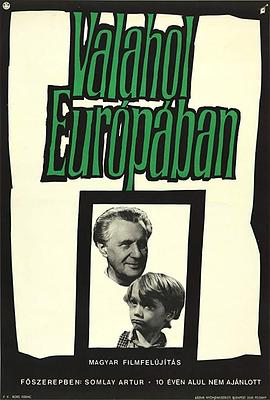
Somewhere in the remote region, the war ends. In the midst of ruined cities and houses in the streets, in rural hamlets, everywhere where people still live, are children who have lost their homes and parents. Abandoned, hungry, and in rags, defenseless and humiliated, they wander through the world. Hunger drives them. Little streams of orphans merge into a river which rushes forward and submerges everything in its path. The children do not know any feeling; they know only the world of their enemies. They fight, steal, struggle for a mouthful of food, and violence is merely a means to get it. A gang led by Cahoun finds a refuge in an abandoned castle and encounters an old composer who has voluntarily retired into solitude from a world of hatred, treason, and crime. How can they find a common ground, how can they become mutual friends The castle becomes their hiding place but possibly it will also be their first home which they may organize and must defend. But even for this, the price will be very high.  To this simple story, the journalist, writer, poet, scriptwriter, movie director, and film theoretician Béla Balázs applied many years of experience. He and the director Géza Radványi created a work which opened a new postwar chapter in Hungarian film. Surprisingly, this film has not lost any of its impact over the years, especially on a profound philosophical level. That is to say, it is not merely a movie about war; it is not important in what location and in what period of time it takes place. It is a story outside of time about the joyless fate of children who pay dearly for the cruel war games of adults.  At the time it was premiered, the movie was enthusiastically received by the critics. The main roles were taken by streetwise boys of a children's group who created their roles improvisationally in close contact with a few professional actors, and in the children's acting their own fresh experience of war's turmoil appears to be reflected. At the same time, their performance fits admirably into the mosaic of a very complex movie language. Balázs's influence revealed itself, above all, in the introductory sequences an air raid on an amusement park, seen in a montage of dramatic situations evoking the last spasms of war, where, undoubtedly, we discern the influence of classical Soviet cinematography. Shooting, the boy's escape, the locomotive's wheels, the shadows of soldiers with submachine guns, the sound of a whistle—the images are linked together in abrupt sequences in which varying shots and expressive sharp sounds are emphasized. A perfectly planned screenplay avoided all elements of sentimentality, time-worn stereotypes of wronged children, romanticism and cheap simplification. The authors succeeded in bridging the perilous dramatic abyss of the metamorphosis of a children's community. Their telling of the story (the scene of pillaging, the assault on the castle, etc) independently introduced some neorealist elements which, at that time, were being propagated in Italy by De Sica, Rossellini, and other film artists. The rebukes of contemporary critics, who called attention to formalism for its own sake have been forgotten. The masterly art of cameraman Barnabás Hegyi gives vitality to the poetic images. His angle shots of the children, his composition of scenes in the castle interior, are a living document of the times, and underline the atmosphere and the characters of the protagonists. The success of the picture was also enhanced by the musical art of composer Dénes Buday who, in tense situations, inserted the theme of the Marseilaise into the movie's structure, as a motive of community unification, as an expression of friendship and the possibility of understanding.  Valahol Europaban is the first significant postwar Hungarian film. It originated in a relaxed atmosphere, replete with joy and euphoria, and it includes these elements in order to demonstrate the strength of humanism, tolerance, and friendship. It represents a general condemnation of war anywhere in the world, in any form.
演员

欧洲的某个地方

资源列表
  • HD中字
相关影视
更多
宇宙巨人:希曼崛起
亚当(尼古拉斯·加利齐纳 饰)在神秘圣剑的召唤下,尘封十五年的异世界王子身份觉醒,平凡人生被彻底颠覆。他跨越时空重返埃坦尼亚,但故乡早已在骷髅王的统治下分崩离析。为拯救曾经的家园与现在的世界,亚当必须再次拔出圣剑,喊出那句响彻寰宇的咒语——“赐予我力量吧!我是希曼!”
调音师2025
讲述一位天才的钢琴调音师的故事,当他发现自己精湛的钢琴调音技巧同样可以用于破解保险箱时,他的生活发生了翻天覆地的变化。
青春格式塔崩坏
本片改编自同名小说,讲述了有一天,朝叶突然发作了青年期失颜症,害怕被周围的人知道的朝叶对谁也不能说,独自烦恼着。唯一注意到朝叶异变的,是同年级的圣。虽然被他折腾得团团转,但朝叶开始重新审视自己真正想做的事、喜欢的事是什么,渐渐地,圣的存在在朝叶心中变得越来越重要。同样,和朝叶在一起的时候,圣面对一直抱着的“某件事”…
惊声尖笑6
两位好友再度卷入一场涉及杀手、怪物和超自然生物的混乱事件。
父亲
二战中,一个西伯利亚猎人前往前线去寻找自己的儿子
小黄人与大怪兽
为了拍摄心中理想的怪兽电影,这群萌趣活宝四处物色演员,竟然真的集齐了各式怪兽,上演疯狂大乱斗!
追星索命
Facing escalating threats from a dangerous stalker, a pop megastar begins falling for the handsome bodyguard she's hired to keep her safe.
老爸老妈
本片讲述了一场车祸使老爸昏迷,醒来的老爸记忆缺失,不记得所有的亲人,儿子之间的纷争,婆媳之间的不睦,令这个家支离破碎,关于赡养老人,作为儿子们互相埋怨,推卸责任,孤独的老爸希望儿子们都过的更好,不想拖累儿子们,选择出走,在找老爸的过程中,儿子们真正的认识到父爱,认识到家的重要,盼望着老爸的回归,家庭的团圆。。。。
美丽从心
本剧的男一号志邦是一名企业家,演员是大家熟知的阳光型男宗峰岩,这个在古装和现在剧中来回奔走的实力派演员,此次将塑造一个前所未有的成功男企业家的形象。最关键的是他将颠覆人们印象中高富帅的张狂和冷血,成为一个为了挽救悬边缘的家庭的好男人,同时也是一个热心有爱的新时代商人。 女一号是来自罗马尼亚的玛丽亚,我们对她并不陌生,同时她和宗峰岩曾经就在《摩西密码》中饰演一对跨国情侣。此次再度牵手,两人在剧中的关系有所升级。从情侣变为老夫老妻,只是彼此间没有了《摩西密码》中的缠绵,反而有着当下青年夫妇之间为了事业而淡化家庭概念的尴尬。 女二号刘真君饰演电视台实习生小惠。大家对这为女演员应该也不陌生,当然导演姜郎对她更不会陌生。今年4月4日在横店开机的电影《江南细雨丝》中,刘真君就曾经与姜导成功合作。此次算是趁热打铁,老兵演新角。
筋饼之恋
以榆林镇方圆正宗筋饼老店、芈乡食品有限公司总经理刘晓东为原型,在他的创业历程基础上进行艺术加工而创作的电影剧本,主要讲述刘晓东与杜春花夫妻俩创业与爱情的感人故事。刘晓东不安心于小镇生活,总幻想出去赚大钱,春花帮助晓东筹集到资金,没想到开公司被骗,欠下一大笔债务。春花父母又极力反对他们俩婚事,然而当白雪的到来使情况发生了意想不到的变化。
一声承诺
讲述了命运多舛的女汉子乔雪,自幼跟随冷酷的姥姥学习武术,常常惹事生非。曾经对乔雪母亲有过承诺的周福,十五年的牢狱生活刑满释放后,寻找到了乔雪,帮助她寻找家人,打拼创业,用生命兑现了照顾乔雪母女的承诺。
足球爸爸
罗飞(孟鹏 饰)是一位平凡的语文老师,他对足球一窍不通,但他的生活却在一通来自法国的电话后发生了翻天覆地的变化。电话的另一端是他多年未见的老同学温妮,她告诉罗飞,她的儿子托比即将踏上中国的土地,寻找自己的父亲。而令罗飞震惊的是,这位父亲居然是他自己——一个昔日的足球明星。在得知这一消息后,罗飞感到一股难以名状的震惊和责任。虽然他并非真正的父亲,但他决定要承担起这份责任,给予托比他所期待的父爱和指引。于是,罗飞开始了艰苦的足球训练,尽管他从未涉足过这个领域,但他下定决心要成为一个合格的“足球父亲”。   作为一名语文老师,罗飞充分利用自己的教学经验,将孙子兵法的智慧运用到足球比赛中。他将这些古代兵法中的战术和策略与现代足球相结合,创造出了一套独特的训练方法。父子俩一同踏上了足球训练的征程,在绿茵场上挥洒汗水,共同成长,共同奋斗。他们的日子充满了欢笑和挑战,父子之间的感情也在足球场上得到了深化。最终,在校园足球大赛中,他们展现出了非凡的团队合作和出色的球技,为托比所在的足球队带来了胜利。
人气612 剧情片
7.5 2023 其它 HD
剧情片

年份: 2023

主演: Artúr   Bánki   Gábor   Miklós   Somlay   Zsuzsa  

描述:Somewhere in the remote region, the war ends. In the midst of ruined cities and houses in the streets, in rural hamlets, everywhere where people still live, are children who have lost their homes and parents. Abandoned, hungry, and in rags, defenseless and humiliated, they wander through the world. Hunger drives them. Little streams of orphans merge into a river which rushes forward and submerges everything in its path. The children do not know any feeling; they know only the world of their enemies. They fight, steal, struggle for a mouthful of food, and violence is merely a means to get it. A gang led by Cahoun finds a refuge in an abandoned castle and encounters an old composer who has voluntarily retired into solitude from a world of hatred, treason, and crime. How can they find a common ground, how can they become mutual friends The castle becomes their hiding place but possibly it will also be their first home which they may organize and must defend. But even for this, the price will be very high.  To this simple story, the journalist, writer, poet, scriptwriter, movie director, and film theoretician Béla Balázs applied many years of experience. He and the director Géza Radványi created a work which opened a new postwar chapter in Hungarian film. Surprisingly, this film has not lost any of its impact over the years, especially on a profound philosophical level. That is to say, it is not merely a movie about war; it is not important in what location and in what period of time it takes place. It is a story outside of time about the joyless fate of children who pay dearly for the cruel war games of adults.  At the time it was premiered, the movie was enthusiastically received by the critics. The main roles were taken by streetwise boys of a children's group who created their roles improvisationally in close contact with a few professional actors, and in the children's acting their own fresh experience of war's turmoil appears to be reflected. At the same time, their performance fits admirably into the mosaic of a very complex movie language. Balázs's influence revealed itself, above all, in the introductory sequences an air raid on an amusement park, seen in a montage of dramatic situations evoking the last spasms of war, where, undoubtedly, we discern the influence of classical Soviet cinematography. Shooting, the boy's escape, the locomotive's wheels, the shadows of soldiers with submachine guns, the sound of a whistle—the images are linked together in abrupt sequences in which varying shots and expressive sharp sounds are emphasized. A perfectly planned screenplay avoided all elements of sentimentality, time-worn stereotypes of wronged children, romanticism and cheap simplification. The authors succeeded in bridging the perilous dramatic abyss of the metamorphosis of a children's community. Their telling of the story (the scene of pillaging, the assault on the castle, etc) independently introduced some neorealist elements which, at that time, were being propagated in Italy by De Sica, Rossellini, and other film artists. The rebukes of contemporary critics, who called attention to formalism for its own sake have been forgotten. The masterly art of cameraman Barnabás Hegyi gives vitality to the poetic images. His angle shots of the children, his composition of scenes in the castle interior, are a living document of the times, and underline the atmosphere and the characters of the protagonists. The success of the picture was also enhanced by the musical art of composer Dénes Buday who, in tense situations, inserted the theme of the Marseilaise into the movie's structure, as a motive of community unification, as an expression of friendship and the possibility of understanding.  Valahol Europaban is the first significant postwar Hungarian film. It originated in a relaxed atmosphere, replete with joy and euphoria, and it includes these elements in order to demonstrate the strength of humanism, tolerance, and friendship. It represents a general condemnation of war anywhere in the world, in any form.
展开


资源列表

友情链接

本地记录
*
*