美剧天堂 美剧天堂

确认

购买本片需要支付0金币,确定要购买吗?

取消

确定

影视简介
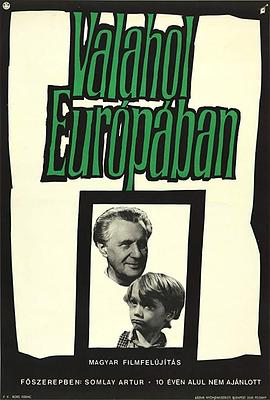
Somewhere in the remote region, the war ends. In the midst of ruined cities and houses in the streets, in rural hamlets, everywhere where people still live, are children who have lost their homes and parents. Abandoned, hungry, and in rags, defenseless and humiliated, they wander through the world. Hunger drives them. Little streams of orphans merge into a river which rushes forward and submerges everything in its path. The children do not know any feeling; they know only the world of their enemies. They fight, steal, struggle for a mouthful of food, and violence is merely a means to get it. A gang led by Cahoun finds a refuge in an abandoned castle and encounters an old composer who has voluntarily retired into solitude from a world of hatred, treason, and crime. How can they find a common ground, how can they become mutual friends The castle becomes their hiding place but possibly it will also be their first home which they may organize and must defend. But even for this, the price will be very high.  To this simple story, the journalist, writer, poet, scriptwriter, movie director, and film theoretician Béla Balázs applied many years of experience. He and the director Géza Radványi created a work which opened a new postwar chapter in Hungarian film. Surprisingly, this film has not lost any of its impact over the years, especially on a profound philosophical level. That is to say, it is not merely a movie about war; it is not important in what location and in what period of time it takes place. It is a story outside of time about the joyless fate of children who pay dearly for the cruel war games of adults.  At the time it was premiered, the movie was enthusiastically received by the critics. The main roles were taken by streetwise boys of a children's group who created their roles improvisationally in close contact with a few professional actors, and in the children's acting their own fresh experience of war's turmoil appears to be reflected. At the same time, their performance fits admirably into the mosaic of a very complex movie language. Balázs's influence revealed itself, above all, in the introductory sequences an air raid on an amusement park, seen in a montage of dramatic situations evoking the last spasms of war, where, undoubtedly, we discern the influence of classical Soviet cinematography. Shooting, the boy's escape, the locomotive's wheels, the shadows of soldiers with submachine guns, the sound of a whistle—the images are linked together in abrupt sequences in which varying shots and expressive sharp sounds are emphasized. A perfectly planned screenplay avoided all elements of sentimentality, time-worn stereotypes of wronged children, romanticism and cheap simplification. The authors succeeded in bridging the perilous dramatic abyss of the metamorphosis of a children's community. Their telling of the story (the scene of pillaging, the assault on the castle, etc) independently introduced some neorealist elements which, at that time, were being propagated in Italy by De Sica, Rossellini, and other film artists. The rebukes of contemporary critics, who called attention to formalism for its own sake have been forgotten. The masterly art of cameraman Barnabás Hegyi gives vitality to the poetic images. His angle shots of the children, his composition of scenes in the castle interior, are a living document of the times, and underline the atmosphere and the characters of the protagonists. The success of the picture was also enhanced by the musical art of composer Dénes Buday who, in tense situations, inserted the theme of the Marseilaise into the movie's structure, as a motive of community unification, as an expression of friendship and the possibility of understanding.  Valahol Europaban is the first significant postwar Hungarian film. It originated in a relaxed atmosphere, replete with joy and euphoria, and it includes these elements in order to demonstrate the strength of humanism, tolerance, and friendship. It represents a general condemnation of war anywhere in the world, in any form.
演员

欧洲的某个地方

资源列表
  • HD中字
相关影视
更多
一招一食
计划将“功夫电影的美学” 与 “市井江湖的叙事” 深度融合,开拓“新武侠美食”赛道。用凌厉剪辑塑造庖丁解牛的“刀光剑影”,让美食制作过程本身成为一场令人“血脉偾张”的视听盛宴。揭秘不同大厨技艺磨炼的酸甜苦辣与对手艺的坚守故事,展现江湖餐饮中的”功夫哲学“。
调音师2025
讲述一位天才的钢琴调音师的故事,当他发现自己精湛的钢琴调音技巧同样可以用于破解保险箱时,他的生活发生了翻天覆地的变化。
嗜血魔灵2023
Kosim在Hirupbagja村的河里发现了黄金后变得富有。他很快嫁给了苏米,过着富裕的地主生活。当他们的孩子迪迪出生时,他的灵魂被阿尔伯特·多米尼克的灵魂所占据,他渴望鲜血,恐吓村民。Kosim试图掩盖这一事实,因为他目前正在竞选新的村长。他必须能够击败索莱赫,索莱赫已经赢得了村民的同情。但当这种精神威胁到他的家人的生命时,科辛决定将迪迪从阿尔伯特·多米尼克的影响中解放出来。为了做到这一点,Kosim必须面对Dorman,一个想向摧毁他生命的人报仇的黑巫师。
重出江湖2026
昔日双花红棍张家乐为社团平乱误致恋人Gigi身亡,入狱八年后金盆洗手,在石澳开酒吧结识洁荷;然江湖未息,坐馆荣哥遭义子火山暗算,仇杀与权斗再起,家乐在守护所爱与彻底抽身之间艰难抉择,最终引向宿命对决。
玛莎和熊2025
女孩玛莎必须救她的哥哥,他被森林邪灵的咒语迷住了,变成了一只山羊。为了打破可怕的诅咒,女孩必须与从小就知道的童话英雄——三只熊联手
飙速劫案
丹尼与克莱尔是感情至深的两兄妹。克莱尔为了哥哥,不惜挺身走险、策划了一场看似完美的抢劫案,只不过她抢的不是大笔钞票,而是从医院劫来的人体器官,她原本计画带丹尼到加拿大进行器官移植手术,但负责偷渡的接口却迟迟没现身,眼看器官就要腐坏,时间一分一秒进入倒数,克莱尔竟天真挟持一名整形医生与医护人员,强迫他们为丹尼进行手术,与此同时,医院劫案的新闻铺天盖地而来,被劫的器官价值连城,这下引发人蛇集团的觊觎,为了躲避警方的追缉和人蛇的追捕,两兄妹被迫展开一场惊心动魄的逃亡之旅。
一江清水
每个时代总有阳光照射不到的“黑暗”可是,总有些人在坚持不懈,不惜付出生命的代价,只为让阳光普照大地,还我一江清水。
与你同程
桑德拉(Sandra)和奥蒂斯(Otis)的初次相遇可谓火花四溅。   桑德拉和丈夫克里斯蒂安(Christian)共同经营着一家酒吧;奥蒂斯则是一名旅行推销员,暗恋着自己最好的朋友比尔(Bill)。   当一列火车在途中突然停下时,人们总会遇到各种意想不到的事情,而他们的相遇正是如此。   原本只是为了和解而请对方喝的一杯咖啡,很快变成了一场热烈的谈话。两人聊起爱情中那些总是不顺心的事,发现彼此都同样缺乏安全感。于是,他们决定互相帮助。毕竟,人们总能轻易给别人提出好建议,却很难解决自己的感情问题。
珀拉
佩尔拉是一位杰出的画家,她的女儿也继承了艺术天赋,成为了一位才华出众的音乐家。20世纪80年代初期,母女俩在维也纳享受着宁静而舒适的生活。然而,一通突如其来的电话打破了这份平静,唤醒了佩尔拉在共产主义时期的捷克斯洛伐克所经历的往昔阴影。为了能够真正地继续自己的人生,她必须鼓起勇气,准备承担一切风险。
史诡记之黄泉村
导演王建闯夜访荒村,从独守古村数十年婆婆口中得知贪念引发的灭村惨案:恶徒胡仁成夺金脉,毒杀恩亲、沉湖灭口,终被师兄德叔以命铲除。德叔以身堵泉,湖水重清。而讲故事婆婆正是当年发誓守护此地的德叔小徒弟——善恶有报,守护不息。
一千零一夜之拯救黄金城
该片经过4年多时间的精细制作和打磨,讲述的是王子卡里莫被邪恶女巫变成了蓝毛怪,在儿时朋友沙拉的的帮助下,历经艰难夺回黄金城的故事,各种情感交织,体现正义永存、不屈不挠的斗争精神。
七月之痒
线上游戏公司DSZ公司总经理何不遇带着公司的100万失踪了,公司董事长阮凌竹(也是何不遇的妻子)怒不可言。她知道他是躲到某个情人家里去了,但是具体是谁不知道。于是,阮凌竹想办法把和何不遇有关系的几个女人弄到了一起,她要弄清楚到底谁是那个“情人”......
人气611 剧情片
7.5 2023 其它 HD
剧情片

年份: 2023

主演: Artúr   Bánki   Gábor   Miklós   Somlay   Zsuzsa  

描述:Somewhere in the remote region, the war ends. In the midst of ruined cities and houses in the streets, in rural hamlets, everywhere where people still live, are children who have lost their homes and parents. Abandoned, hungry, and in rags, defenseless and humiliated, they wander through the world. Hunger drives them. Little streams of orphans merge into a river which rushes forward and submerges everything in its path. The children do not know any feeling; they know only the world of their enemies. They fight, steal, struggle for a mouthful of food, and violence is merely a means to get it. A gang led by Cahoun finds a refuge in an abandoned castle and encounters an old composer who has voluntarily retired into solitude from a world of hatred, treason, and crime. How can they find a common ground, how can they become mutual friends The castle becomes their hiding place but possibly it will also be their first home which they may organize and must defend. But even for this, the price will be very high.  To this simple story, the journalist, writer, poet, scriptwriter, movie director, and film theoretician Béla Balázs applied many years of experience. He and the director Géza Radványi created a work which opened a new postwar chapter in Hungarian film. Surprisingly, this film has not lost any of its impact over the years, especially on a profound philosophical level. That is to say, it is not merely a movie about war; it is not important in what location and in what period of time it takes place. It is a story outside of time about the joyless fate of children who pay dearly for the cruel war games of adults.  At the time it was premiered, the movie was enthusiastically received by the critics. The main roles were taken by streetwise boys of a children's group who created their roles improvisationally in close contact with a few professional actors, and in the children's acting their own fresh experience of war's turmoil appears to be reflected. At the same time, their performance fits admirably into the mosaic of a very complex movie language. Balázs's influence revealed itself, above all, in the introductory sequences an air raid on an amusement park, seen in a montage of dramatic situations evoking the last spasms of war, where, undoubtedly, we discern the influence of classical Soviet cinematography. Shooting, the boy's escape, the locomotive's wheels, the shadows of soldiers with submachine guns, the sound of a whistle—the images are linked together in abrupt sequences in which varying shots and expressive sharp sounds are emphasized. A perfectly planned screenplay avoided all elements of sentimentality, time-worn stereotypes of wronged children, romanticism and cheap simplification. The authors succeeded in bridging the perilous dramatic abyss of the metamorphosis of a children's community. Their telling of the story (the scene of pillaging, the assault on the castle, etc) independently introduced some neorealist elements which, at that time, were being propagated in Italy by De Sica, Rossellini, and other film artists. The rebukes of contemporary critics, who called attention to formalism for its own sake have been forgotten. The masterly art of cameraman Barnabás Hegyi gives vitality to the poetic images. His angle shots of the children, his composition of scenes in the castle interior, are a living document of the times, and underline the atmosphere and the characters of the protagonists. The success of the picture was also enhanced by the musical art of composer Dénes Buday who, in tense situations, inserted the theme of the Marseilaise into the movie's structure, as a motive of community unification, as an expression of friendship and the possibility of understanding.  Valahol Europaban is the first significant postwar Hungarian film. It originated in a relaxed atmosphere, replete with joy and euphoria, and it includes these elements in order to demonstrate the strength of humanism, tolerance, and friendship. It represents a general condemnation of war anywhere in the world, in any form.
展开


资源列表

友情链接

本地记录
*
*